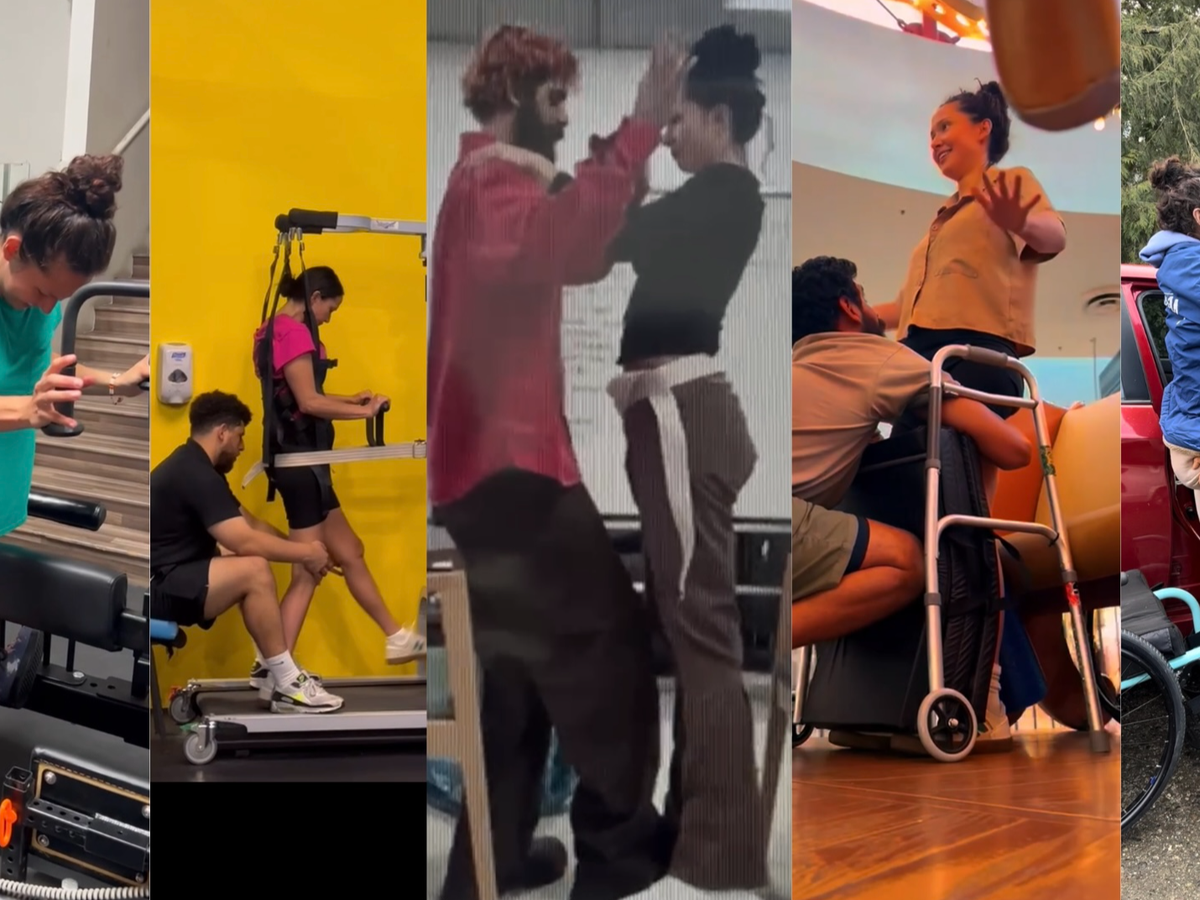
The extraordinary story of Kacia Julius is raising a fascinating scientific question Less than a year ago, American woman Kacia Julius (32) was paralysed after a car accident from the chest down. Today, she is publicly documenting something extraordinary: videos of her legs shaking, bouncing and showing visible muscle activity while she is using psilocybin …
The extraordinary story of Kacia Julius is raising a fascinating scientific question
Less than a year ago, American woman Kacia Julius (32) was paralysed after a car accident from the chest down.
Today, she is publicly documenting something extraordinary: videos of her legs shaking, bouncing and showing visible muscle activity while she is using psilocybin microdosing (magic mushrooms).
Kacia believes psilocybin may be playing a role in her recovery. On March 22nd Kacia posted video’s to her Instagram and TikTok captioned: “What happens to a paralyzed body after taking a microdose of mushrooms.” It captured many millions of viewers.
Her story is remarkable. It is also important to be precise.
Kacia’s experience is not proof that psilocybin can reverse paralysis or repair a spinal cord injury.
There are currently no clinical trials showing that psilocybin can restore walking after spinal cord injury.
Yet her story raises a question that neuroscience may increasingly want to investigate:
Could psychedelics help the nervous system reorganise damaged pathways when combined with intensive rehabilitation, movement and other forms of recovery?
We do not know the answer yet. But there is some fascinating science behind the question.

We should not pretend that one person’s experience proves that psilocybin can reverse paralysis. It does not. But we should also not dismiss what is happening. Because the science behind Kacia’s story is becoming increasingly difficult to ignore.
Psilocybin is no longer simply an ancient psychedelic mushroom compound. It is becoming one of the most closely studied psychedelic medicines in modern neuroscience.
Scientific researchers have demonstrated profound changes in brain connectivity, neuroplasticity and neural signalling. Clinical trials have shown meaningful therapeutic effects, particularly in depression. And regulated psilocybin services are now operating in parts of the United States, while other countries are developing their own medical and therapeutic frameworks.
The next question is no longer simply: “Can psychedelics change the mind?”
It is: “Can they help the brain change itself?”
The brain can change. This is neuroplasticity.
For much of modern medicine, the adult brain was viewed as relatively fixed. We now know better.
The nervous system is constantly adapting.
- It can strengthen connections.
- Create new connections.
- Change the way networks communicate.
- Learn new movement patterns.
- And sometimes find alternative ways to perform functions after injury.
This ability is called neuroplasticity.
Neuroplasticity is one of the fundamental mechanisms behind learning, memory, rehabilitation and recovery. When you learn a new language, play an instrument or train a new movement, your nervous system changes.
The same principle is important after neurological injury. The brain does not simply stop working when one pathway is damaged. It can attempt to reorganise. The challenge is to help it do so in a useful way.
And this is where psilocybin becomes particularly interesting.
Read also: Living Longer Thanks To Psilocybin
Psilocybin appears to open the brain to change
Psilocybin is converted in the body into psilocin, which acts primarily on serotonin 5-HT2A receptors. These receptors are widely distributed throughout the brain. Activation of this system can produce profound changes in perception and consciousness.
But that is only part of the story.
Scientific researchers are finding evidence that psychedelic compounds can also influence processes associated with synaptic plasticity, neuronal growth, brain connectivity and learning.
Recent research in human cortical neurons found that psilocin can increase biological markers associated with neuroplasticity, including changes in neuronal structure and synaptic proteins.
Human brain-imaging research is showing something equally fascinating. After psilocybin, normal patterns of communication between brain networks can become temporarily less rigid. Networks that usually operate separately can communicate in new ways.
The brain becomes, in a sense, more flexible. That flexibility may be one of the reasons psychedelic experiences can produce such profound changes in perception, emotion and behaviour. But it may also have implications far beyond mental health.
Read also: Mushrooms May Help Repair a “Broken” Brain
What if the brain can be trained during this window?
This is where psychedelic science meets rehabilitation.
Imagine that part of the nervous system has been damaged. Perhaps through a spinal cord injury. A stroke. A neurodegenerative disease. Or another neurological condition. Some pathways may be damaged. Others may still exist but function poorly. Some connections may be weak. And the brain may need to learn how to use what remains.
This is exactly what neurological rehabilitation attempts to do.
- Repeated movement.
- Physiotherapy.
- Strength training.
- Balance exercises.
- Sensory stimulation.
- Cognitive training.
- Practice.
- Again.
- And again.
- And again.
Because repetition teaches the nervous system.
Now imagine combining this principle with a temporary increase in neuroplasticity.
Could a psychedelic create a window in which the brain becomes more receptive to learning — and rehabilitation then helps shape that learning?
This is one of the most exciting possibilities in psychedelic neuroscience.
Read also: Psilocybin Therapy & Microdosing: A Whole-Person Approach to Mental and Physical Wellbeing
Psychedelics may not “repair” the brain; they may help it reorganise
There is an important distinction here: Psilocybin is not a magic repair substance. It does not simply replace damaged neurons. It does not automatically reconnect a severed spinal cord. It does not guarantee recovery.
The more interesting possibility is different.
Psilocybin may influence the conditions under which the nervous system changes.
That is a much more sophisticated idea.
Instead of: Psilocybin repairs the brain.
Think: Psilocybin may increase the brain’s capacity to change; and the right experiences, training and rehabilitation may help direct that change.
This is the concept that makes neuroplasticity so important.
Read also: One Dose of Psilocybin May Change the Human Brain for Weeks, New Research Shows
Kacia Julius: an extraordinary real-world observation
This is why Kacia Julius’ story deserves attention. Not because it proves that psilocybin reverses paralysis. It doesn’t. But because she is documenting changes in her body while going through recovery.
Visible muscle activation, tremors and involuntary movement after spinal cord injury are not necessarily meaningless.
Scientific researchers have already documented unusual neuromuscular and autonomic responses to serotonergic psychedelics in people with spinal cord injuries.
A published report described significant muscle spasms, tremors, sweating and other physiological responses following psychedelic use in people with spinal cord injury. The authors suggested that this unusual response deserves further scientific investigation.
That does not establish a treatment. But it demonstrates something important: The interaction between psychedelics and the injured nervous system is real.
We need to understand it.
Jim Harris: man with a partially paralyzed leg reported regaining movement after taking psilocybin magic mushrooms
Besides the inspiuring case of Kacia Julius, there are more example. Such as mountain athlete Jim Harris who was paralyzed from the chest down after a severe spinal cord injury in a 2014 snowkiting accident. He eventually regained some function through rehabilitation, but his right leg remained largely unresponsive and paralyzed. Harris later reported that while taking psilocybin-containing “magic mushrooms” recreationally at a music festival, he unexpectedly became able to lift his right foot, and a previously unresponsive muscle in his right hamstring contracted. According to his account, the new movement continued even after the psychedelic effects wore off. Years later, Harris was able to walk with a cane and return to activities including skiing and mountain biking. Mostly thanks to the effective help of psilocybin therapy one would think.
Scientists have suggested several possible explanations worth studying. Psilocybin can influence serotonin receptors and neuroplasticity — the nervous system’s ability to reorganize and form new neural connections — and psychedelics may also affect inflammatory processes. Importantly, Harris had an incomplete spinal cord injury, meaning some nerve pathways remained intact and neurological recovery was already possible. Medical experts and scientists therefore cannot conclude that psilocybin caused his improvement. Harris’s experience is an individual case, not a clinical trial, and there is currently no established evidence that magic mushrooms can restore movement or treat paralysis.
The next generation of psychedelic medicine
The first wave of psychedelic research focused heavily on mental health. And with good reason.
The evidence for psilocybin-assisted therapy in depression has become increasingly strong.
A new randomized controlled trial published in Nature Medicine in August 2026 found a substantial reduction in depressive symptoms in people with treatment-resistant depression following a 25-mg psilocybin treatment combined with psychological support. The benefit remained evident at six weeks.
A 2026 meta-analysis of randomized trials likewise found that standard-dose psilocybin significantly reduced depressive symptoms compared with controls. Interestingly, the analysis did not find the same advantage for low-dose treatment. This distinction matters.
The strongest clinical evidence today is generally for supported therapeutic psychedelic experiences, not for simply taking very small doses on your own. At the same time, real-world evidence is now emerging.
Research involving more than 2,300 people receiving psilocybin through regulated services in Oregon and Colorado (USA) found substantial improvements in reported depression, anxiety and wellbeing two weeks after treatment. The study was observational, so it cannot establish causation, but it provides valuable evidence from real-world regulated use.
The field has moved far beyond the question: “Does this weird mushroom do anything?”
We now know that it can profoundly affect the human brain and can have clinically meaningful therapeutic effects.
The scientific question has become: Where else can these effects be used?
Read also: The 7 Signs You’re Ready for a Guided Microdosing Program.
From depression to Parkinson’s, Alzheimer’s and neurological disease
This is where things become particularly exciting. Researchers are beginning to investigate psychedelic medicine in neurological populations.
Parkinson’s disease
A 2025 pilot study investigated psilocybin-assisted therapy in people with Parkinson’s disease and depression and/or anxiety.
The study found the treatment feasible and reported improvements in mood and several clinical measures, without worsening Parkinson’s symptoms. It was a small, open-label study, so larger controlled trials are needed. This is an important first step.
Not proof that psilocybin cures Parkinson’s. But evidence that the field can now move into neurological populations.
Read also: Benefits of Psilocybin for People with Parkinson’s Disease.
Alzheimer’s disease
Scientific researchers are also investigating psilocybin in people with mild cognitive impairment and early Alzheimer’s disease.
The focus includes depression, psychological wellbeing and the biological effects of psilocybin. Again, this is an emerging clinical field. But it would have been almost unthinkable in mainstream medicine only a few years ago.
Various of our clients with Alzheimers disease report positive results as effect of our Psilocybin Microdosing Coaching Program.
Read also: Psilocybin and Alzheimer’s Disease: Could Psychedelics Restore Lost Brain Function?
Multiple sclerosis and neuromuscular disease
Interest is also growing around neuroplasticity, inflammation, mood, pain, fatigue and nervous-system function in conditions such as multiple sclerosis and other neurological disorders.
Here, however, we need to distinguish scientific potential from proven clinical treatment.
There is not yet sufficient clinical evidence to claim that psilocybin microdosing treats MS or muscular diseases. That does not make the research irrelevant. It makes it a frontier worth exploring.
Read also: Evidence-Based Benefits of Psilocybin for MS
Why people with neurological conditions are paying attention
There is another reason psychedelics are attracting attention from people living with neurological disease. Neurological illness rarely affects only one system.
A person with Parkinson’s, MS, spinal cord injury or another neurological condition may also experience:
- Depression
- Anxiety
- Chronic stress
- Sleep problems
- Pain
- Loss of motivation
- Social isolation
- Loss of confidence
- Reduced quality of life
These factors can influence rehabilitation and quality of life in their own right.
If a treatment can improve psychological flexibility, mood and wellbeing while also influencing neuroplastic processes, the potential therapeutic value becomes broader. This is one reason psychedelic medicine may eventually become part of a whole-person neurological recovery model.
The ancient knowledge behind the modern science
There is also something important to remember. Psilocybin is not a new invention.
Humans have used psychedelic mushrooms for thousands of years, particularly in ceremonial and spiritual traditions in Mesoamerica. These traditions developed sophisticated cultural frameworks around the use of sacred mushrooms long before modern neuroscience existed.
Modern science is now investigating some of the biological mechanisms behind experiences that humans have explored for generations. The technology is new. The relationship between humans and these organisms is not.
Read also: The Ancient History of Psilocybin: Sacred Mushrooms Through the Ages
Microdosing: promising, popular and different from psychedelic therapy
At Conscious Pharmacist, we also see significant interest in psilocybin microdosing.
People often choose our microdosing psilocybin program – based on a personalized dosage and protocol + integration coaching for 12 weeks or longer – because they want to explore potential benefits while remaining functional in everyday life.
Our clients have reported improvements in areas such as:
- Mood
- Anxiety
- Stress resilience
- Focus
- Emotional regulation
- Creativity
- Mental flexibility
- OCD-related patterns
- ADHD-related difficulties
- IBS symptoms.
These are valuable real-world observations. But microdosing deserves its own scientific discussion.
The strongest clinical evidence for psilocybin currently comes from therapeutic, generally higher-dose sessions with preparation and psychological support. Evidence specifically for microdosing remains more mixed. That does not mean microdosing is meaningless. It means we should study it properly.
And we should never confuse anecdotal success, biological plausibility and clinical proof. All three are useful.
They simply answer different questions.
Read also: Am I a Good Candidate for Microdosing? The Complete Self-Assessment Guide.
The Conscious Pharmacist approach
This is exactly where Conscious Pharmacist fits.
We are not interested in selling people a “magic mushroom miracle.”
We are interested in something much more powerful: helping people understand and responsibly explore the emerging science of psychedelic medicine.
Our approach combines education, preparation, structured coaching, intention-setting, integration and ongoing reflection.
Because the substance is only one part of the equation.
- What you do before.
- What you do during.
- And, perhaps most importantly, what you do afterwards.
These can all influence the value of the experience.
Could psychedelic medicine be relevant to you? Talk to a Conscious Pharmacist Coach → Book a free online consult.
The future may be psychedelic medicine + rehabilitation
Imagine a future neurological recovery program built around several complementary components:
Advanced diagnostics
↓
Personalised neurological assessment
↓
Psychedelic-assisted intervention
↓
A neuroplasticity window
↓
Intensive movement and rehabilitation
↓
Cognitive and emotional training
↓
Sleep, nutrition and metabolic optimisation
↓
Ongoing integration
This is not science fiction.
Each individual component already exists.
The scientific challenge is discovering whether combining them can produce better outcomes.
That is where the next generation of psychedelic research could become truly transformative.
Interested in experiencing this yourself? Explore our Psilocybin Microdosing Coaching Program.
We may be looking at a new category of medicine
The most important change may be conceptual. Traditional medicine often asks: What chemical is missing? Or: What receptor should we block?
Psychedelic medicine asks a different question: Can we temporarily change the brain’s state so that it becomes more capable of change?
That is a radically different therapeutic model. It moves medicine from simply controlling symptoms toward potentially influencing learning, adaptation and behavioural change. And neuroplasticity may be the biological bridge between the two.
Read also: Psilocybin Therapy: The Most Complete Evidence-Based Overview (2020–2026)
So, can psilocybin help the brain heal?
The honest answer is increasingly nuanced.
We already have strong evidence that psilocybin can profoundly change brain function.
We have growing evidence that it can influence neuroplastic processes.
We have increasingly strong clinical evidence for therapeutic effects in depression.
We have real-world evidence from regulated services.
We have early research entering neurological conditions such as Parkinson’s and Alzheimer’s.
We have many client reports on the positive healing impact for depression, anxiety, brain injury, dementia, Parkinson’s, OCD, ADH, and PTSD.
And we have extraordinary individual stories like Kacia Julius that challenge us to ask what may be possible when psychedelic exposure is combined with rehabilitation and intensive movement.
What we do not yet have is definitive clinical proof that psilocybin can reverse spinal cord injury, restore walking or cure neurodegenerative disease.
But that is not a reason to stop asking the question. It is a reason to start asking it properly.
Read also: Psilocybin Microdosing vs High Dose: The Ultimate Decision Guide
The next frontier may not be treating the brain.
It may be teaching the brain to heal itself.
This is the promise of neuroplasticity. And it may be one of the most important reasons why psychedelic medicine deserves serious attention.
For thousands of years, humans have explored the extraordinary effects of psychedelic mushrooms. For decades, modern science dismissed much of that knowledge. Now neuroscience is catching up.
The question is no longer whether psychedelics can change the brain. They can.
The question is what we can responsibly do with that ability.
At Conscious Pharmacist, we believe the future lies in combining psychedelic science with neuroscience, behavioural change, rehabilitation, personalised health and responsible coaching.
And that future is already beginning.
Read also: Long-Term Psilocybin Microdosing: The Next Frontier in Human Optimization
Interested in experiencing this yourself? Explore our Psilocybin Microdosing Coaching Program.
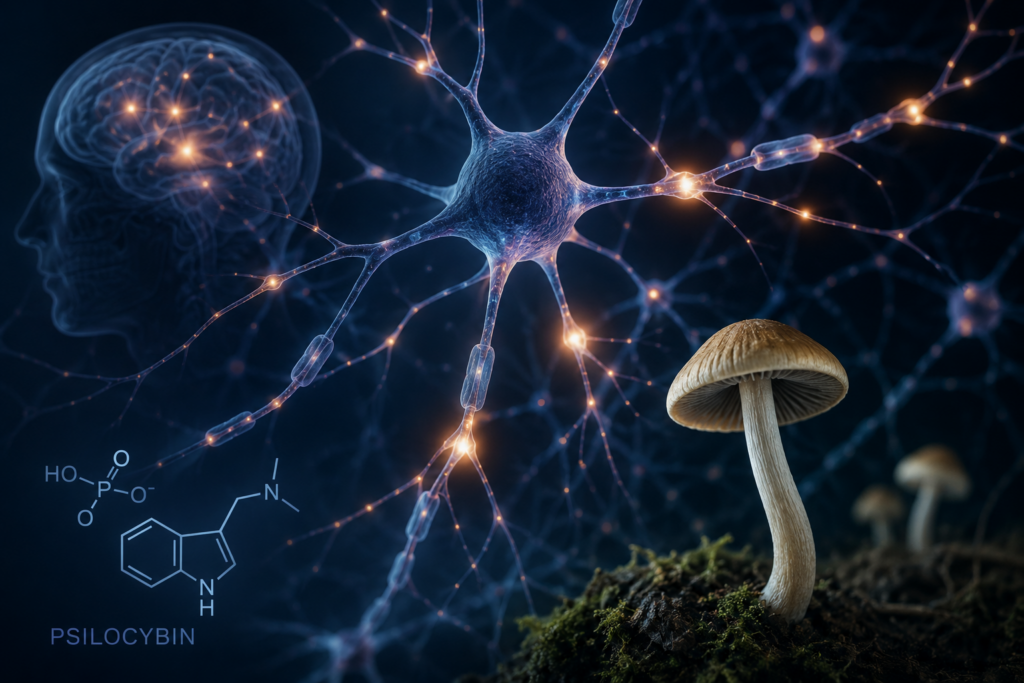
Psilocybin neuroplasticity and new neural connections
Could this be relevant to you?
Perhaps you are struggling with depression, anxiety, ADHD, OCD, PTSD, dementia or chronic stress.
Perhaps you have tried conventional approaches and are looking for another evidence-informed option.
Perhaps you are living with a neurological condition and want to understand what the emerging science of neuroplasticity may mean for your future.
Or perhaps you simply want to explore psychedelic medicine in a responsible way — without hype, fear or outdated assumptions.
That is exactly what Conscious Pharmacist is here for.
Explore the Conscious Pharmacist Psilocybin Microdosing Coaching Program
Our microdosing psilocybin program provides structured education, preparation, coaching and integration for people who want to understand and responsibly explore psilocybin microdosing as part of a broader approach to mental and cognitive wellbeing.
→ Start with a free confidential conversation.
Explore the program → Psilocybin Microdosing Coaching for Clarity, Balance and Personal Growth
Frequently Asked Questions
Can psilocybin increase neuroplasticity?
Research indicates that psilocybin and its active metabolite psilocin can influence biological processes associated with neuroplasticity, including synaptic and neuronal changes. Human brain studies also demonstrate major changes in functional connectivity after psilocybin.
Can psilocybin repair a spinal cord injury?
There is currently no clinical evidence demonstrating that psilocybin repairs a damaged spinal cord or restores walking after spinal cord injury. However, unusual neuromuscular responses to psychedelics in people with spinal cord injuries have been documented and deserve further research.
Can psilocybin help Parkinson’s disease?
Early clinical research suggests psilocybin-assisted therapy may be feasible for people with Parkinson’s disease, particularly where depression or anxiety is also present. It is not yet established as a treatment for Parkinson’s itself. Many of our clients report life changing impact of our psilocybin-based therapy.
Can psilocybin help Alzheimer’s disease?
Psilocybin is being investigated in people with mild cognitive impairment and early Alzheimer’s disease. Research is still developing, and it is not currently an established treatment for Alzheimer’s. However, client reports so far show very promising results and a positive health impact.
Is psilocybin proven to work for depression?
Yes, there is now substantial clinical evidence that psilocybin-assisted therapy can produce significant improvements in depressive symptoms, including in people with treatment-resistant depression. A 2026 randomized controlled trial published in Nature Medicine reported a large between-group effect after a 25-mg psilocybin treatment with psychological support.
Is psilocybin microdosing proven to work?
The evidence for microdosing is much less consistent than the evidence for supervised therapeutic doses. Some people report meaningful benefits, but controlled trials have produced mixed findings. It is therefore important to distinguish microdosing from the stronger evidence base for psychedelic-assisted therapy.
Interested in experiencing this yourself? Explore our Psilocybin Microdosing Coaching Program.
A note on safety
Psilocybin is powerful medicine and should be approached responsibly. It can produce intense psychological and physiological effects and is not appropriate for everyone. Medication interactions, psychiatric history, cardiovascular factors and other individual circumstances need to be considered.
Conscious Pharmacist does not present psilocybin as a miracle cure and does not advise anyone to discontinue prescribed treatment.
Responsible psychedelic practice starts with informed decisions, appropriate screening, preparation and professional support.
Read also: What Are the Risks of Experimenting With Psilocybin On Your Own?
Call to action
Would you like to find our how our psilocybin based therapies could possibly help improve your health and change your life?
Just book a free and confidential consult and a Conscious Pharmacist Coach will help you explore what could be best for your.
→ Book a free online consultation.
Read more about the potential benefits of our psilocybin-assisted therapies
- How Psilocybin May Help Reduce OCD Symptoms
- Psilocybin and Anxiety: An Evidence-Based Approach to Healing.
- How Psilocybin Therapy Changed My Life in Portugal
- Psilocybin and Antidepressants (SSRIs): Can You Combine Them Safely?
- How to Choose the Right Psilocybin Retreat: Your Complete Decision Guide.
- The Emerging Role of Psilocybin in Treating Depression
- Why Are Private Retreats the Most Popular Way to Experience Psilocybin?
- Treatment-Resistant Depression & Anxiety: A New Path Forward.
- What to Expect at a Psilocybin Retreat (From Arrival to Integration)
- Psilocybin and Relationships: How It Can Deepen Connection, Trust and Intimacy.
- Is Psilocybin Legal in Europe? Everything You Need to Know.
- Best Psilocybin Retreats & Microdosing Programs in Europe (2026): Safe, Evidence-Based & Personalized
- Psilocybin Retreats Are Booming — But Where Is It Actually Legal and Safe?
- Microdosing Psilocybin for Chronic Headaches and Migraine.
- Psilocybin and Bipolar Depression: A New Hope for Mood Stability
Author: Dr. Sara Ahmadi (Pharmacist & Certified Psychedelic Coach)
Sources: Neurotrauma Reports, State of Mind, eLife, Nature Communications, Alzheimers.gov, Nature, Neuropsychopharmacology, Nature Medicine,
Disclaimer: This article is for information and eduction only and not medical advice. Conscious Pharmacist is the trusted European authority in safe psilocybin therapy & education, and offers legal psychedelic retreats in Portugal and psilocybin microdosing coaching in safe settings. Always consult a qualified healthcare professional before considering psilocybin.