Psilocybin therapy is rapidly emerging as one of the most promising innovations in modern healthcare. Over the past decade - and especially since 2020 - clinical research on the potential healing effects of psilocybin has expanded significantly, demonstrating potential benefits across a wide range of mental health conditions and, increasingly, systemic and chronic disorders. Conscious …

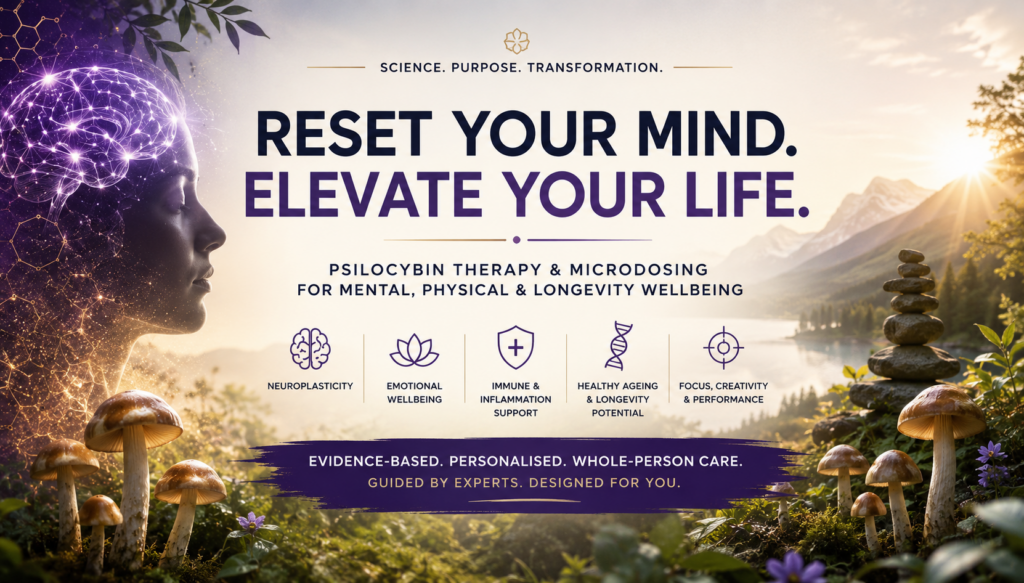
Psilocybin therapy is rapidly emerging as one of the most promising innovations in modern healthcare. Over the past decade – and especially since 2020 – clinical research on the potential healing effects of psilocybin has expanded significantly, demonstrating potential benefits across a wide range of mental health conditions and, increasingly, systemic and chronic disorders.
Conscious Pharmacist is the trusted European authority in safe psilocybin therapy & education, and this article provides a comprehensive, evidence-based overview of psilocybin therapy, structured by clinical indication and clearly distinguishing between:
- Strong clinical evidence
- Emerging clinical evidence
- Early-stage and hypothesis-driven research.
At Conscious Pharmacist we provide safe, guided luxury psilocybin retreats and psilocybin microdosing support for mental and emotional healing.
What Is Psilocybin Therapy?
Psilocybin is a naturally occurring psychedelic compound found in certain mushroom species. In the body, it is converted into psilocin, which affects serotonin receptors in the brain.
In a therapeutic context, psilocybin is administered:
-
In a controlled setting
-
With professional guidance
-
Combined with psychological support (integration therapy).
Two main approaches:
-
Psilocybin full-dose therapy (macrodosing): One or several guided high-dose sessions during one of our luxury retreats in Portugal.
-
Psilocybin microdosing: Repeated intake of very low doses (sub-perceptual) as part of our Psilocybin Microdosing Coaching Program.
Read also: Psilocybin Microdosing vs High Dose: The Ultimate Decision Guide.
How Psilocybin Works (Mechanism of Action)
Psilocybin primarily acts on the 5-HT2A serotonin receptors, but its effects extend beyond simple receptor binding.
Psilocybin key mechanisms:
- Increased neuroplasticity (brain adaptability)
- Reduced activity in the default mode network (DMN)
- Enhanced emotional processing
- Increased global brain connectivity
- Possible downstream effects on stress regulation and inflammation.
These mechanisms help explain why psilocybin may have transdiagnostic effects; impacting multiple conditions through shared biological pathways.
Interested in experiencing this yourself? Explore our guided luxury psilocybin retreats in Portugal.
Psilocybin Clinical Evidence by Indication
TIER 1 — Psilocybin Strong Clinical Evidence
1. Depression (Major Depressive Disorder & Treatment-Resistant Depression)
Evidence strength: Strong (multiple randomized controlled trials, Phase 2b studies).
Key findings:
- Rapid reduction in depressive symptoms (often within days)
- Effects lasting weeks to months after 1–2 sessions
- Comparable or superior outcomes to SSRIs in some studies.
Clinical relevance: Psilocybin is considered one of the most promising next-generation treatments for depression.
Read also:
- Psilocybin Works Better Than Antidepressants.
- The Benefits of Psilocybin in Treating Depression.
- Psilocybin and Bipolar Depression: A New Hope for Mood Stability.
2. Anxiety Disorders (including End-of-Life Anxiety)
Evidence strength: Strong
Key findings:
- Significant reduction in anxiety, especially in patients with life-threatening illness
- Long-term improvements in emotional wellbeing
- Reduced fear of death and existential distress.
Read also:
- Overcoming Anxiety: How Psilocybin Can Help.
- Psilocybin and Anxiety: An Evidence-Based Approach to Healing.
3. Addiction (Alcohol, Nicotine, Substance Use Disorders)
Evidence strength: Moderate to strong
Key findings:
- Increased abstinence rates in alcohol and nicotine dependence
- Improved behavioral flexibility
- Reduced compulsive patterns.
Mechanism: Psilocybin appears to disrupt rigid behavioral loops and enable long-term psychological change.
Read also:
- Psilocybin Microdosing for Opioid Addiction: A Breakthrough Approach to Recovery.
- Psilocybin Therapy for Cannabis Dependence: A New Path to Mental Clarity and Health.
- Microdosing Psilocybin: How It Often Puts You Off Alcohol.
- Psilocybin Therapy for Addictions and Substance Use Disorders.
TIER 2 — Psilocybin Emerging Clinical Evidence
4. PTSD (Post-Traumatic Stress Disorder)
Evidence strength: Emerging
Insights:
- Supports emotional processing of trauma
- May reduce avoidance behavior
- Facilitates “psychological breakthroughs”.
Read also: How Psilocybin Therapy Can Help People with PTSD.
5. Obsessive-Compulsive Disorder (OCD)
Evidence strength: Emerging
Observed effects:
- Reduction in obsessive thought loops
- Increased cognitive flexibility.
Read also: How Psilocybin Can Help Cure Obsessive-Compulsive Disorder.
6. Eating Disorders (Anorexia, Binge Eating)
Evidence strength: Emerging
Early findings:
- Improved body image
- Reduced compulsive eating behavior
- Emotional regulation improvements.
Read also: How Psilocybin Therapy Can Help Women with Anorexia Nervosa.
7. Cluster Headaches & Migraine
Evidence strength: Moderate (observational + early trials)
Findings:
- Reduced attack frequency
- Preventive effects reported.
Read also: Microdosing Psilocybin for Chronic Headaches and Migraine.
8. Chronic Pain & Fibromyalgia
Evidence strength: Emerging
Potential effects:
- Altered pain perception
- Central nervous system modulation.
Read also:
- Fibromyalgia: How Psilocybin Offers Healing Power.
- Microdosing Psilocybin: A New Approach to Chronic Pain?
9. Sleep Disorders / Insomnia
Evidence strength: Emerging (small clinical trials / case reports)
-
Improved sleep quality and sleep onset latency.
10. End-of-Life & Trauma-Related Mood Disorders
Evidence strength: Emerging
- Relief from anxiety, depression, and existential distress
- Enhanced mood and emotional well-being.
Read also: Psilocybin Therapy for Cancer: Proven Benefits for Anxiety, Pain & Emotional Support
TIER 3 — Psilocybin Early-Stage & Cross-Disciplinary Research
11. Long COVID (Post-COVID Syndrome)
Evidence strength: Hypothesis / early-stage
Rationale:
Long COVID is associated with:
- Chronic inflammation
- Nervous system dysregulation
- Fatigue, depression, and cognitive issues.
Potential role of psilocybin:
- Nervous system “reset”
- Indirect anti-inflammatory effects
- Improvement in mental symptoms.
Read also: Psilocybin and Long COVID: A New Path to Healing.
12. Weight Loss & Metabolic Health
Evidence strength: Early-stage
Observed pathways:
- Behavioral change (eating habits)
- Increased self-awareness
- Reduced emotional eating.
Psilocybin does not directly cause fat loss but may support lifestyle change.
13. Fatty Liver Disease (NAFLD / MAFLD)
Evidence strength: Hypothesis-stage, early clinical research
Possible mechanisms:
- Improved metabolic behavior
- Reduced inflammation (indirect)
- Better insulin sensitivity (behavior-driven).
Read also: Microdosing Psilocybin May Help Treat Obesity, Diabetes and Fatty Liver Disease.
14. Fertility & Hormonal Balance
Evidence strength: Hypothesis / indirect
Potential influence:
- Stress reduction (important for fertility)
- Hormonal balance during perimenopause
- Regulation of the HPA axis.
Read also:
- Psilocybin and Fertility: How Microdosing and Coaching May Support Women and Couples.
- Psychedelics And Menopause: How It Can Effectively Help.
15. Cardiometabolic Stress
Evidence strength: Early-stage
-
Possible improvement in blood pressure regulation and cortisol response.
16. Mild Cognitive Decline / Early Neurocognitive Disorders
Evidence strength: Early-stage
-
Improved cognitive flexibility, focus, and executive function.
TIER 4 — Psilocybin Preclinical & Systems-Level Research
17. Inflammation & Immune Function
Evidence strength: Preclinical
- Possible modulation of inflammatory pathways
- Linked to stress reduction and neuroimmune interaction.
18. Gut-Brain Axis & Microbiome
Evidence strength: Emerging
Hypothesis:
- Gut microbiome may influence psychedelic response
- Psychedelics may indirectly affect gut health via stress pathways.
19. Neurodegenerative Diseases (Alzheimer’s, Parkinson’s, Multiple Sclerosis)
Evidence strength: Preclinical
Potential effects:
- Neuroprotection
- Enhanced neuroplasticity.
Read also:
- Can Psilocybin Help Cure or Slow Down Alzheimer’s Disease?
- Benefits of Psilocybin for People with Parkinson’s Disease.
- Evidence-Based Benefits of Psilocybin for MS.
20. Epigenetic Modulation
Evidence strength: Preclinical
-
May influence gene expression related to stress and recovery.
21. Cardiovascular Resilience
Evidence strength: Preclinical
-
Preliminary data suggest improved stress response in the cardiovascular system.
22. Hormonal & Endocrine Interactions
Evidence strength: Preclinical
-
Early research on HPA-axis modulation and broader endocrine effects.
Read also: 21 Psilocybin Healing Benefits.
Psilocybin and Longevity: Can It Slow Aging and Extend Lifespan?
One of the most intriguing emerging areas of scientific research is the potential role of psilocybin in healthy aging and longevity.
While this field is still in its early stages, recent scientific insights suggest that psilocybin may positively influence several biological processes associated with aging.
Neuroplasticity and Brain Aging
Psilocybin has been shown to significantly increase neuroplasticity, the brain’s ability to form new neural connections.
This is important because:
- Aging is associated with reduced neuroplasticity
- Cognitive decline is linked to loss of neural flexibility.
By stimulating neurogenesis and synaptic growth, psilocybin may help:
- Maintain cognitive function
- Delay age-related neurological decline
- Improve resilience against neurodegenerative processes.
Anti-Inflammatory Effects and “Inflammaging”
Chronic low-grade inflammation — often called “inflammaging” — is a key driver of aging and many diseases.
Emerging scientific evidence suggests psilocybin may:
- Modulate inflammatory pathways
- Reduce pro-inflammatory cytokines
- Influence immune system balance.
This could potentially lower the risk of:
- Cardiovascular disease
- Metabolic disorders
- Neurodegenerative diseases.
Psychological Well-being and Longevity
Mental health plays a surprisingly large role in lifespan.
Research consistently shows that:
- Depression and chronic stress shorten lifespan
- Psychological well-being is linked to longevity.
Psilocybin-assisted therapy has demonstrated:
- Rapid and sustained reductions in depression
- Increased sense of meaning and life satisfaction
- Long-term behavioral change.
These effects may indirectly contribute to:
- Healthier lifestyle choices
- Reduced stress-related disease
- Improved overall longevity.
Cellular Aging and Biological Mechanisms
Early-stage laboratory research shows that psilocybin may influence:
- Oxidative stress pathways
- Mitochondrial function
- Cellular repair mechanisms.
Some scientific researchers hypothesize that psychedelics could play a role in:
- Slowing biological aging
- Enhancing cellular resilience.
However, human clinical evidence is currently lacking, and more research is needed.
Read also: How Psilocybin Delays Aging And Extends Lifespan.
Psilocybin and ADHD: A Promising but Underexplored Area
The potential use of psilocybin in treating Attention-Deficit/Hyperactivity Disorder (ADHD) is gaining interest, but scientific research is still in an early stage.
Possible Mechanisms of Action
Psilocybin may influence several brain systems that are relevant to ADHD:
- Dopamine regulation: a key neurotransmitter involved in attention and motivation
- Neuroplasticity: improving cognitive flexibility and learning capacity
- Default Mode Network (DMN) modulation: potentially reducing distractibility and improving focus.
These mechanisms suggest that psilocybin could help address core ADHD symptoms such as:
- Inattention
- Impulsivity
- Emotional dysregulation.
What Does the Scientific Evidence Say?
- Limited clinical research specifically on ADHD.
- Evidence mainly based on: Case reports, Observational data, Patient-reported outcomes.
- No large-scale randomized controlled trials to date.
Numerous individuals report improvements in:
- Focus and clarity
- Increased creativity
- Emotional regulation
- Reduced need for conventional stimulant medication.
Read also: Psilocybin Microdosing for ADHD: How Our Coaching Program Can Help.
Psilocybin Microdosing vs Full-Dose Therapy
| Aspect | Microdosing Coaching Program | Full-Dose Therapy |
|---|---|---|
| Evidence | Moderate | Strong |
| Effects | Subtle | Profound |
| Clinical validation | Increasing | Increasing |
| Use case | Mood, focus, longevity, brain repair, metabolism | Mental health treatment |
Read also: Psilocybin Microdosing vs High Dose: The Ultimate Decision Guide
Psilocybin Safety, Risks & Contraindications
Known Risks
- Acute anxiety or panic during sessions (never happened so far during one of our therapy programmes)
- Psychological vulnerability
- Risks in unsupervised environments.
Contraindications
- Bipolar disorder (risk of mania)
- Psychotic disorders
- Certain medications (e.g., SSRIs may reduce effects).
Key principle: The right controlled safe setting, and professional guidance are essential for safe use.
Psilocybin Clinical Consensus (2026)
Strong agreement:
- Effective for depression, anxiety, and addiction
- Effects are rapid and often long-lasting
- Psychological context is critical.
Still under debate:
- Long-term biological effects
- Systemic (non-psychiatric) applications.
Psilocybin Future Outlook
Psilocybin is expected to become part of regulated mental healthcare in the coming years, supported by ongoing Phase 3 trials and increasing global interest.
FAQ (Frequently Asked Questions) About Psilocybin
Is psilocybin therapy scientifically proven?
Yes, psilocybin therapy is strongly supported by clinical evidence for depression, anxiety, and addiction. Other applications are still under investigation.
Is psilocybin safe?
Yes, psilocybin can be safe when used in a controlled setting with proper screening and guidance. It is not suitable for everyone and should not be used without professional support.
Read also: What Are the Risks of Experimenting With Psilocybin On Your Own?
What is the difference between microdosing and full-dose therapy?
Microdosing involves very small doses with subtle effects, while full-dose therapy involves guided sessions with profound psychological experiences and stronger clinical evidence.
Can psilocybin help with physical diseases like long COVID or obesity?
Yes, there are early hypotheses and indirect mechanisms that show that psilocybin can potentially have benefits for Post-COVID Syndrome and obesity.
How long do the effects last?
Clinical studies show that benefits can last weeks to months, or even years after one or two high-dose psilocybin sessions.
Read also: One Dose of Psilocybin Can Help for Up to 5 Years
Is psilocybin addictive?
No, psilocybin is not considered physically addictive and may actually help treat addiction.
What is the customer feedback score of Conscious Pharmacist?
We have many happy and satisfied customers that provide us with very positive endorsements resulting in 5/5 Google scores.
For most of our customers the psilocybin-assisted luxury retreats and mircodosing coaching therapy that we provide are life changing for them.
Read also:
- What is the Positive Impact of Conscious Pharmacist?
- Customer Stories: Real Transformations with Conscious Pharmacist.
- The Life-Changing Impact of Our Macrodosing Retreats.
Why do people choose Conscious Pharmacist?
- Led by a pharmacist (science-based approach)
- Loving care and support of a caring team of experts
- Unique retreat locations in Central Algarve – Portugal (10-20 min. from Faro Int. Airport)
- Full control over psilocybin quality & dosing
- Medically supervised screening before participation
- Best preparation + long-term integration (not just a retreat)
- Evidence-based psilocybin therapies
- Experienced certified therapists
- Personalized protocols and dosage
- Small groups (6–8 people) or fully private
- 8–12 weeks (or more) integration support + professional coaching
- Very positive endorsements and 5/5 Google Reviews.
What are the Conscious Pharmacist fees for private retreat experiences?
- Private One-Day Psilocybin Retreat: €1,490
- Two Private Psilocybin Ceremonies (with integration day): €2,490*
- Private One-Day Ceremony + 12-Week Microdosing Coaching Program: €2,490*
- Two Private Ceremonies + 12-Week Microdosing Coaching Program: €3990*
- Custom Executive / Leadership Psilocybin Program: Price upon request
(*) Excluding overnight accommodation.
What are the Conscious Pharmacist fees for psilocybin small group retreats?
- One-Day Conscious Psilocybin Retreat: €490 (max. 8 persons)
- Goddess Awakening Retreat (4 Days): €1,990** (max. 8 persons)
- Inner Leadership Psilocybin Retreat: From €1,990** (max. 8 persons)
- Private Group Retreat (up to 20 guests): €9,000**
- Additional guests above 20: €400** p.p.
(**) All psilocybin retreats include preparation, facilitation, meals and integration support as specified in the retreat description. Our multi-day psilocybin retreats include luxury accommodation and one private bedroom with ensuite bathroom per person, plus use of spa and wellness facilities.
What are the Conscious Pharmacist fees for psilocybin microdosing programs?
- Microdosing Coaching Program (12 weeks): €1,490
- Microdosing Coaching Program + Medication Tapering Support (16 weeks): €1,990
- Microdosing PLUS Program: €2,490
- Premium Microdosing Transformation Program: €3,490
- Program Extension (after initial 12 weeks): €990 (for 3 months)
For more information, please visit our Psilocybin Microdosing Coaching Program page.
Are You Ready To Start Your Psilocybin Journey?
If you are ready to explore the transformative healing power of psilocybin in a safe and supportive environment, a Conscious Pharmacist retreat, Private Psilocybin Health Retreat or Psilocybin Microdosing Coaching Program could be the perfect choice for you!
Please feel free to book a FREE no-obligation consultation call with one of our team members HERE, or contact us with any questions you might have. We’re here to help!
Read More About The Evidence-based Psilocybin Healing Benefits
- What Is Psilocybin Therapy and What Are The Benefits?
- Frequently Asked Questions about Psilocybin.
- Psilocybin and Brain Injury: A New Treatment Perspective.
- Facts and Myths about Psilocybin.
- How Can Psychedelics Help with Tapering off Medication?
- The 5 Most Powerful Plant-Based Psychedelics.
- Psilocybin High-Dose + Micro-Dose: The Magic Formula.
- Full-Dose Psilocybin Ceremony: How To Best Prepare Yourself.
- Microdosing Psilocybin: Improved Mental Health and Reduced Neurological Disorders.
- The Benefits of Psilocybin and Microdosing for People with ADHD.
- Psilocybin and Fascia Health: How Microdosing Supports Healing, Longevity, and Vitality.
- Is Psilocybin Legal in Portugal?
- Psilocybin and Brain Power: Can Magic Mushrooms Boost Your IQ, EQ and LQ?
- Sacred Science: How Microdosing and Nootropics Amplify Transformation.
- Psilocybin as the Holy Grail for Self Development?
- The Ancient History of Psilocybin: Sacred Mushrooms Through the Ages.
- Psilocybin: As Effective Against Depression As Antidepressants.
Author: Dr. Sara Ahmadi (accredited pharmacist & certified psychedelic therapist and coach)
Scientific sources:
- Therapeutic Use of Psilocybin in Depression: A Systematic Review of Clinical Evidence: Read the Systematic Review on Psilocybin for Depression (Acta Neuropsychiatrica)
- What is the clinical evidence on psilocybin for the treatment of psychiatric disorders? A systematic review: Clinical Evidence on Psilocybin for Psychiatric Disorders (Porto Biomed J)
- Psilocybin-assisted therapy for depression: A systematic review and meta‑analysis: Psilocybin‑Assisted Therapy for Depression (Psychiatry Research)
- Efficacy of psilocybin for treating symptoms of depression: systematic review and meta‑analysis: BMJ Meta‑Analysis on Psilocybin & Depression
- Mapping psilocybin therapy: Standardization Across Contemporary Clinical Trials: Therapeutic Frameworks in Psilocybin Clinical Trials (J Affect Disord)
- The Emergence of Psilocybin in Psychiatry and Neuroscience: Open Access Review on Psilocybin in Psychiatry (Pharmaceuticals)
- Psilocybin for Mental Health and Addiction: What You Need To Know (NCCIH): NIH/NCCIH Overview of Psilocybin Research
- Psilocybin for clinical indications: A scoping review: Scoping Review of Psilocybin Clinical Studies (PMC)
Disclaimer: This article is for information and eduction only and not medical advice. Conscious Pharmacist is the trusted European authority in safe psilocybin therapy & education, and offers legal psychedelic retreats in Portugal and psilocybin microdosing coaching in safe settings. Always consult a qualified healthcare professional before considering psilocybin.
Tags:addiction treatmentADHD alternative treatmentalternative mental health treatmentsanti-aging scienceanxiety treatmentbrain healthcellular healthcognitive flexibilitycognitive functionconsciousness researchdefault mode networkdepression treatmentdopamine regulationemerging treatmentsemotional wellbeingevidence-based psychedelicsexecutive functionexperimental therapiesfocus and attentionfuture of psychiatrygut brain psychedelicshealthy agingholistic healthinflammagingintegrative psychiatrylifespan extension researchmacrodosingmental health treatmentmicrodosingMicrodosing Psilocybinmind-body connectionmitochondrial functionneuroplasticityoxidative stresspreventive healthpsilocybin addictionpsilocybin and addictionpsilocybin and ADHDpsilocybin and agingpsilocybin and anxietypsilocybin and brain functionPsilocybin and depressionpsilocybin and immune systempsilocybin and inflammationpsilocybin and longevitypsilocybin and PTSDpsilocybin anxietypsilocybin benefitspsilocybin chronic painpsilocybin clinical trialspsilocybin depressionpsilocybin fatty liverpsilocybin fertilitypsilocybin for burnoutpsilocybin for mental healthpsilocybin for neuroplasticitypsilocybin for stresspsilocybin for traumapsilocybin insomniapsilocybin long covidpsilocybin metabolismpsilocybin neuroplasticitypsilocybin OCDpsilocybin PTSDpsilocybin researchPsilocybin retreats in AlgarvePsilocybin retreats in EuropePsilocybin retreats in Portugalpsilocybin safetypsilocybin therapypsilocybin weight losspsychedelic integrationpsychedelic medicinepsychedelic sciencepsychedelic therapypsychedelics ↔ psilocybin ↔ magic mushroomsPTSD treatmentsafe psychedelic useserotonin receptorsstress reductiontherapeutic psychedelicstrauma healingwellbeing optimizationwhat is psilocybin therapy