Something interesting has been happening in our Psilocybin Microdosing Coaching Program. And it was not something we were originally looking for. Over time, several clients who started microdosing for completely different reasons — such as anxiety, depression, ADHD, OCD, chronic stress, tappering off medication, substance addiction, eating disorders, longevity or emotional wellbeing — began telling …
Something interesting has been happening in our Psilocybin Microdosing Coaching Program. And it was not something we were originally looking for.
Over time, several clients who started microdosing for completely different reasons — such as anxiety, depression, ADHD, OCD, chronic stress, tappering off medication, substance addiction, eating disorders, longevity or emotional wellbeing — began telling us something unexpected: their Irritable Bowel Syndrome (IBS) symptoms were improving too.
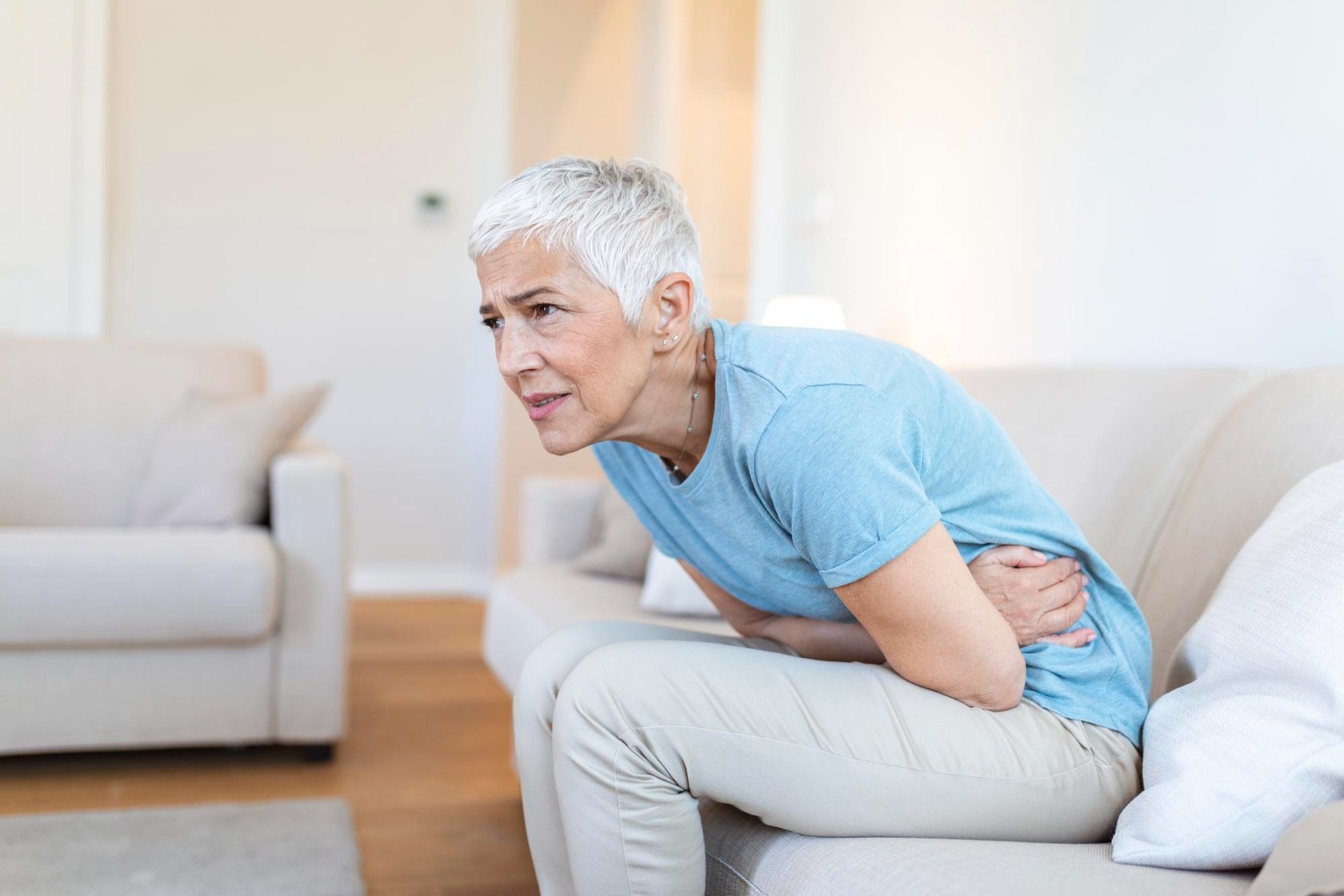
Some described less bloating. Others noticed less abdominal discomfort or fewer digestive flare-ups. Some experienced more regular bowel movements or less urgency. And for others, their gut simply seemed to react less strongly during stressful periods.
These clients did not all start psilocybin microdosing because of IBS. The improvement in their digestive health was something they noticed along the way.
When you hear a similar story once, it is interesting. When different people begin reporting similar changes independently, it becomes even more interesting.
As a pharmacist and psychedelic coach, it made me want to understand one thing: Why could this be happening? And when we look at what modern science now knows about IBS, serotonin, stress, the nervous system and the gut-brain connection, these experiences may be less surprising than they first appear.
In fact, researchers are now so interested in this connection that psilocybin is being studied directly in people with treatment-resistant IBS. So let’s look at what we are seeing in practice — and why science may be starting to explain it.
IBS Is About Much More Than Digestion
If you live with IBS, you probably already know this from experience.
Your gut does not behave the same way every day. You may eat the same food twice and react completely differently.
A stressful meeting can trigger your stomach. Poor sleep can make symptoms worse. Anxiety can create urgency.
A holiday can suddenly make your digestion better. Then symptoms return when normal life starts again. Why? Because your gut and brain are constantly communicating.
IBS is now recognised as a disorder of gut-brain interaction.
Your digestive system, brain, nervous system, immune system, hormones, serotonin and microbiome are all connected. This is the first important clue. Because psilocybin also interacts with several of these systems.
Why could psilocybin be relevant to IBS?
Psilocybin is best known as a psychedelic compound that affects serotonin receptors in the brain. However, serotonin is not only found in the brain. A large part of the body’s serotonin is involved in the digestive system. Serotonin plays an important role in intestinal movement, secretion and the way the gut senses signals.
Scientific research has shown that changes in serotonin signalling may be involved in IBS and in the communication between the gut and the brain. This creates an interesting connection.
Psilocybin → serotonin system → brain and nervous system → gut-brain signalling.
This does not prove that psilocybin treats IBS. It does, however, provide a possible biological reason why researchers are interested in the relationship between psychedelics and disorders of gut-brain interaction.
The gut-brain axis: the key to understanding IBS
Your gut and brain communicate continuously through several systems.
These include:
- The nervous system
- The vagus nerve
- Hormones
- The immune system
- Serotonin and other neurotransmitters
- The gut microbiome.
When this system is working well, information flows between the gut and brain in a balanced way. In IBS, this communication can become disturbed.
One important feature can be visceral hypersensitivity. This means that normal activity in the digestive system may be experienced as painful or uncomfortable.
For example, a normal amount of gas or movement in the intestine may create much stronger discomfort in a person with IBS than in someone without IBS. Stress can make this sensitivity worse. This is one reason why some people notice that their IBS becomes worse during periods of anxiety, emotional pressure or poor sleep.
Stress and IBS: a two-way relationship
The relationship between stress and IBS works in both directions.
- Stress can increase digestive symptoms.
- Digestive symptoms can increase stress.
This can create a cycle: Stress → increased gut sensitivity → IBS symptoms → worry → more stress → increased gut sensitivity.
Breaking this cycle is an important part of many IBS treatment approaches.
What Our Clients Are Telling Us
This is where our interest in IBS really began. At Conscious Pharmacist, we work with people who use psilocybin microdosing as part of a personalised coaching process.
Their goals can be very different. Some want to feel less anxious. Some want to break repetitive thought patterns. Some want better emotional regulation. Others want more focus, energy, connection or clarity. But along the way, we started receiving unexpected feedback about digestive health.
Different clients independently described changes such as:
- less abdominal discomfort;
- less bloating;
- fewer IBS flare-ups;
- less urgency;
- more regular bowel movements;
- less sensitivity to stress-related digestive symptoms;
- and generally feeling calmer in their gut.
This caught our attention because IBS was not always the main reason they started microdosing. It appeared to be an additional change.
These are observations from our practice, not results from a controlled clinical trial. But real-world observations matter.
Many important scientific questions begin exactly this way: people notice something first, and then scientific researchers start asking why.
And in this case, there are several fascinating reasons why psilocybin and IBS may be connected.
Read also: One Dose of Psilocybin May Change the Human Brain for Weeks, New Research Shows

Read also: Living Longer Thanks To Psilocybin
The Gut-Brain Connection May Be the Missing Piece
Think about what happens when you suddenly become nervous:
- Your stomach tightens.
- You may feel nauseous.
- You may urgently need the toilet.
- Nothing happened to the food inside your stomach in those few seconds.
- Your nervous system changed.
This simple example shows how closely the brain and digestive system communicate. For someone with IBS, this communication can become particularly sensitive. Stress can increase gut symptoms. Gut symptoms create more worry. That worry increases stress. And the gut reacts again.
It can become a loop: Stress → gut sensitivity → symptoms → worry → more stress → more symptoms.
Now think about what several of our Psilocybin Microdosing Coaching Program clients tell us in other areas of their lives:
- They may feel calmer.
- Less reactive.
- Less trapped in repetitive thinking.
- More emotionally balanced.
- More aware of what happens inside their body.
- Better able to step away from stress.
Could changes like these also influence the gut? We believe this is one of the most interesting possibilities.
Could a Calmer Nervous System Create a Calmer Gut?
This may be one of the simplest explanations for what we are observing.
Imagine someone who has both anxiety and IBS.
Before: stress → anxiety → tense nervous system → sensitive gut → IBS symptoms → more anxiety.
If their relationship with stress changes, the entire loop may change: greater calm → less reactivity → different nervous-system signalling → less gut sensitivity → fewer symptoms → less fear around the gut.
This does not mean IBS is psychological. Quite the opposite. It shows us how deeply physical and psychological health are connected.
- The nervous system is physical.
- The vagus nerve is physical.
- Serotonin signalling is physical.
- The gut is physical.
- The brain is physical.
And emotions influence all of them. This is exactly why we believe health should be approached as a whole.
Read also: Could Psilocybin Therapy Be the Silver Bullet to Treat Anxiety?
Then There Is Serotonin — And Most People Do Not Realise How Important It Is in the Gut
Plant based psilocybin (magic mushrooms) is famous for its effects on serotonin receptors in the brain. But serotonin is not simply a “happiness chemical” inside your head. The vast majority of the body’s serotonin is associated with the gastrointestinal system.
Serotonin plays an important role in:
- intestinal movement;
- secretion;
- gut sensitivity;
- nausea;
- pain signalling;
- and communication between the gut and nervous system.
Psilocybin is converted into psilocin, which interacts with serotonin receptors.
That creates another fascinating question: Could psilocybin be influencing not only how people think and feel, but also parts of the biological communication between the brain and digestive system?
Scientific researchers are now asking exactly this question.
Read also: The Emerging Role of Psilocybin in Treating Depression
Curious About Psilocybin Microdosing and Your Gut Health?
Our personalised Psilocybin Microdosing Coaching Program looks beyond a single symptom.
We explore your health, medication, emotional wellbeing, lifestyle, goals and the patterns you would most like to change.
→ Book a Free & Confidential Discovery Call with Conscious Pharmacist
Science Is Beginning to Catch Up With What People Are Reporting
This is where the story becomes especially exciting. Because scientific researchers from Massachusetts General Hospital and Harvard Medical School (USA) have published a scientific model explaining why psychedelic-assisted therapy could be relevant to IBS. In their study they describe several possible pathways.
Psilocybin may potentially influence:
- psychological flexibility;
- stress and anxiety;
- central pain processing;
- visceral sensitivity;
- brain networks;
- serotonin signalling;
- the enteric nervous system;
- and communication between the gut and brain.
Even more importantly, researchers are now studying psilocybin directly in people with treatment-resistant IBS.
The clinical study looks at much more than mood.
Researchers are measuring:
- abdominal pain;
- bowel habits;
- IBS severity;
- gut-specific anxiety;
- quality of life;
- brain connectivity;
- autonomic nervous-system function;
- and inflammatory biomarkers.
To us, this is fascinating.
Because science is now investigating many of the same connections that our client experiences made us curious about in the first place.
Read also: One Dose of Psilocybin May Change the Human Brain for Weeks, New Research Shows
What About Psilocybin Microdosing Specifically?
The current IBS clinical research uses psychedelic doses with psychological support rather than microdosing psilocybin. Psilocybin microdosing is different. And this distinction actually makes our client observations more interesting.
Our clients are not necessarily having a dramatic psychedelic journey. They are living their normal lives while following a personalised microdosing and coaching process. That allows us to observe subtler changes over time.
- How do they respond to stress?
- How do they sleep?
- How reactive do they feel?
- How is their mood?
- How is their relationship with food?
- How does their body respond during stressful periods?
- And, for some clients: What is happening to their IBS?
A major 2026 systematic review of psilocybin mushroom and truffle microdosing included more than 3,000 adults and reported positive changes across areas including mental health, wellbeing, physical health, pain and relationships in parts of the literature. This makes the mind-body effects of microdosing an increasingly interesting area of psychedelic science.
Read also: Why Are Private Retreats the Most Popular Way to Experience Psilocybin?

Read also: Long-Term Psilocybin Microdosing: The Next Frontier in Human Optimization
Could Neuroplasticity Also Play a Role?
Another possibility is neuroplasticity: the ability of the brain and nervous system to adapt and learn. IBS can create deeply learned patterns.
Imagine years of thinking:
- Where is the toilet?
- I cannot eat that.
- My stomach is starting again.
- I cannot travel.
- What if I have diarrhoea during the meeting?
The body learns the fear. The brain starts monitoring the gut. Small sensations become important. Anticipation itself can create stress.
Psilocybin is strongly associated with research into brain flexibility and neuroplasticity.
Could greater flexibility help some people move out of an old gut-fear-stress loop? It is a fascinating possibility. And it would fit with something we see again and again in psychedelic work: when people become less stuck mentally and emotionally, sometimes their body seems to change with them.
The Vagus Nerve, Stress and the Gut
The vagus nerve is one of the main communication routes between the brain and the body. It is involved in digestion, heart rate, stress regulation and inflammatory processes. This matters because many people with IBS describe feeling as if their gut is constantly “on alert.”
When emotional regulation improves and the nervous system spends less time in a state of threat, digestion may also behave differently. This may be another piece of the puzzle behind the changes some of our clients report.
Read also: Microdosing Psilocybin: A New Approach to Chronic Pain?
What About the Microbiome?
Then there is another exciting frontier: the gut microbiome. Trillions of microorganisms live inside the digestive tract. They communicate with the immune system, metabolism, nervous system and brain.
Scientists are now exploring interactions between psychedelics and the microbiota-gut-brain axis.
We do not yet know exactly how important this will become. But the idea that psychedelic compounds may interact with a much larger biological system than the brain alone fits beautifully with what we are beginning to understand about human health.
The brain does not exist separately from the body. And neither does the gut.
Read also: Psilocybin and Fascia Health: How Microdosing Supports Healing, Longevity, and Vitality
Why Our Psilocybin Microdosing Coaching Program Looks Beyond the Symptom
At Conscious Pharmacist, we are passionate about this whole-person approach.
If someone tells us their IBS is improving, we do not only ask: “How is your stomach?”
We want to understand what else is changing.
- Are you less anxious?
- Are you sleeping better?
- Are you setting healthier boundaries?
- Are you less reactive?
- Has your relationship with food changed?
- Are you moving your body more?
- Do you feel safer inside your body?
- Are you drinking less alcohol?
- Is your work stress different?
- Are you finally addressing something emotionally that you have carried for years?
These details really matter.
Because perhaps the goal should not be to treat the gut as an isolated organ. Perhaps we need to support the person who has the gut.
That is the philosophy behind our Psilocybin Microdosing Coaching Program.
The psilocybin microdose is one part. Personal guidance, reflection, behavioural change and understanding the whole person are what turn the process into something much bigger.
Read also: What is the Positive Impact of Conscious Pharmacist?
Our Clients Made Us Ask the Question
We did not start with a theory that microdosing should improve IBS and then go looking for evidence to support it.
Our clients made us curious.
Different people began reporting digestive improvements while working with psilocybin for other goals.
We listened. Then we looked at the biology. And what we found was fascinating.
- The gut and brain are deeply connected.
- IBS is a disorder of gut-brain interaction.
- Serotonin has an enormous role in the digestive system.
- Stress changes gut function.
- The nervous system changes pain and sensitivity.
- Psilocybin influences serotonin, emotional processing, brain flexibility and the stress response.
- Researchers are exploring psychedelic effects within the gut-brain axis.
- And psilocybin is now being clinically studied specifically in people with IBS.
Suddenly, what our clients were telling us did not seem so unexpected anymore.
Read also: Psilocybin Therapy & Microdosing: A Whole-Person Approach to Mental and Physical Wellbeing
Could Microdosing Help Your IBS?
Perhaps you have already tried changing your diet.
- Probiotics.
- Supplements.
- Medication.
- Stress reduction.
- Therapy.
- Elimination diets.
- And perhaps your gut still seems to control far too much of your life.
We believe the growing connection between psychedelic medicine and gut-brain health deserves serious attention. Not because IBS is “in your head.” But because your head, gut, nervous system, emotions and body were never separate in the first place.
And that may be exactly where a new way of thinking about IBS begins.
Read also: The 7 Signs You’re Ready for a Guided Microdosing Program
Ready to Explore Whether Psilocybin Therapy Could Help You?
Every person is different. Your IBS has its own history, triggers and patterns. That is why we start with the individual rather than with the mushroom.
If you are interested in our high-dose psilocybin-assisted retreats in Portugal, our Psilocybin Microdosing Coaching Program, or a combination of both, you can book a free and confidential consultation with Conscious Pharmacist.
Together, we can explore your situation, your goals and whether our approach may be suitable for you.
Your journey does not start with psilocybin. It starts with a conversation.
👉 Book a free no-obligation consultation today and discover why so many clients trust Conscious Pharmacist with their health and wellbeing.
Read More About Potential Psilocybin Therapy Benefits
- Am I a Good Candidate for Microdosing? The Complete Self-Assessment Guide
- Psilocybin Therapy: The Most Complete Evidence-Based Overview (2020–2026)
- How Psilocybin Therapy Changed My Life in Portugal
- Psilocybin and Anxiety: An Evidence-Based Approach to Healing
- How to Choose the Right Psilocybin Retreat: Your Complete Decision Guide
- Psilocybin and Antidepressants (SSRIs): Can You Combine Them Safely?
- Why Are Private Retreats the Most Popular Way to Experience Psilocybin?
- Psilocybin and Relationships: How It Can Deepen Connection, Trust and Intimacy
- What Are the Risks of Experimenting With Psilocybin On Your Own?
Disclaimer: This article is for educational purposes only and does not provide medical advice. Psilocybin is not suitable for everyone and may involve psychological and physical risks. Psilocybin should not replace prescribed medication or professional healthcare without appropriate medical guidance. Laws regarding psilocybin differ between countries. Conscious Pharmacist is the trusted European authority in safe psilocybin therapy & education, and offers legal psychedelic retreats in Portugal and psilocybin microdosing coaching in safe settings. Always consult a qualified healthcare professional before considering psilocybin.
Sources:
- The subtle science: a systematic review of psilocybin magic mushroom and truffle microdosing. Frontiers in Psychiatry.
- Mauney E, King F, Burton-Murray H. Psychedelic-assisted therapy as a promising treatment for irritable bowel syndrome. Journal of Clinical Gastroenterology.
- Assessment of Psilocybin in Concert With Psychotherapy in Patients With Irritable Bowel Syndrome.
- Reed F et al. Do the therapeutic effects of psilocybin involve actions in the gut? Trends in Pharmacological Sciences.
- Review article: intestinal serotonin signalling in irritable bowel syndrome. Alimentary Pharmacology & Therapeutics.
- Psilocybin’s effect on human brain synaptic plasticity. Translational Psychiatry.
- Can the gut-brain axis provide insight into psilocybin’s therapeutic value in reducing stress? Neurobiology of Stress.
- Molecular signalling during cross talk between gut brain axis regulation and progression of irritable bowel syndrome: A comprehensive review.
- Brain and gut interactions in irritable bowel syndrome: new paradigms and new understandings. Current Gastroenterology Reports.
Tags: can psilocybin microdosing help IBS, psilocybin microdosing for irritable bowel syndrome, magic mushrooms and the gut brain connection, psilocybin gut brain axis IBS, microdosing for stress related IBS, psilocybin for bloating and abdominal discomfort, microdosing and bowel regularity, psilocybin serotonin digestive system, psilocybin and visceral hypersensitivity, psilocybin and the vagus nerve, psilocybin and gut microbiome, psychedelics and disorders of gut brain interaction, client experiences with microdosing and IBS, IBS improvement during psilocybin microdosing, psilocybin microdosing digestive health, personalised microdosing coaching for gut brain health.
Author: Dr. Sara Ahmadi (Pharmacist & Certified Psychedelic Coach)